

US Treasury issues new interim guidance on CAMT and announces comprehensive review
This announcement adds to recent Treasury actions aimed at modifying the regulatory approach to CAMT, particularly regarding its practical application and operational complexity.
2/26/20262 min read
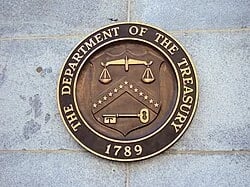
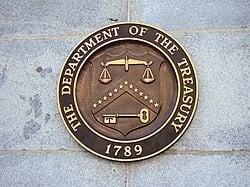
The U.S. Department of the Treasury, along with the Internal Revenue Service (IRS), announced the issuance of new interim guidance related to the Corporate Alternative Minimum Tax (CAMT). The statement indicates that the goal is to reduce administrative burdens, provide greater regulatory clarity, and facilitate investment and economic growth.
Context: The CAMT and its Regulatory Evolution
The CAMT was incorporated in 2022 as a 15% minimum tax applicable to large corporations with high levels of accounting profit. Since its implementation, the tax authority has issued proposed regulations and interim guidance to clarify its application, especially in structures with investments in partnerships.
In its most recent statement, the Treasury maintains that the regime has generated significant administrative costs, even in cases where there is no minimum tax payable, and that it has introduced operational complexity in determining the tax base.
Content and Purpose of the New Announcement.
The official statement outlines three central objectives:
Reducing compliance burdens: The goal is to decrease the administrative complexity associated with determining the CAMT (Common Agricultural Taxable Income), particularly in areas where compliance is costly even when the corporation does not ultimately become subject to the minimum tax.
Providing regulatory clarity: The Treasury Department states that it will use the authority granted by Congress to issue clearer and more predictable rules.
Supporting investment and economic growth: The statement links administrative simplification to removing obstacles to innovation, investment, and job creation in the United States.
The Treasury also announced that the new guidelines will allow for a comprehensive redesign of the CAMT regulatory framework, incorporating feedback from affected sectors, with the goal of issuing final rules that are “viable and predictable”.
Change of Focus in CAMT Management
The statement contains explicit criticism of the original design of the system, noting that:
It was a complex scheme.
It imposed high administrative costs.
It did not achieve the projected revenue targets.
From an institutional perspective, the announcement reflects a transition in CAMT's administrative policy:
Initial stage Current approach of the Treasury
Implementation of the minimum tax with detailed Simplification and comprehensive review of the technical rules. regulatory framework.
Focus on ensuring a minimum tax floor. Focus on reducing workloads and improving operability.
Complex proposed regulations. Regulatory reproposal based on feedback.
The Treasury emphasizes that the regulatory authority granted by Congress allows for adjusting the implementation of the tax to avoid unnecessary obstacles to economic activity.
Practical Implications
The issuance of new interim guidance and the announcement of a comprehensive review of the regulatory framework imply:
Continued administrative flexibility regarding the CAMT.
Possible substantial modification of the originally proposed regulations.
Increased uncertainty while final rules are being issued.
Greater emphasis on the operational viability of the tax.
For corporations with complex structures—especially those with investments in partnerships, funds, or joint ventures—the announcement suggests that the CAMT regulatory environment will continue to evolve in the short and medium term.
Final Consideration
The statement confirms that the CAMT is not in a phase of definitive regulatory stability. Although the minimum tax remains in effect as a legal concept, its regulatory implementation continues to be adjusted through interim guidance and proposed revisions.
The ongoing process demonstrates that, in the case of the CAMT, the effective configuration of the tax depends both on its legislative design and on the administrative decisions that define the specific method for determining the tax base and compliance obligations.
Notice: This content is for informational purposes only and does not replace professional advice. Every tax situation is unique and requires detailed analysis.
Contact us
We are here to help you always.
PHONE
+52 66 2210 1975
© 2026. All rights reserved.